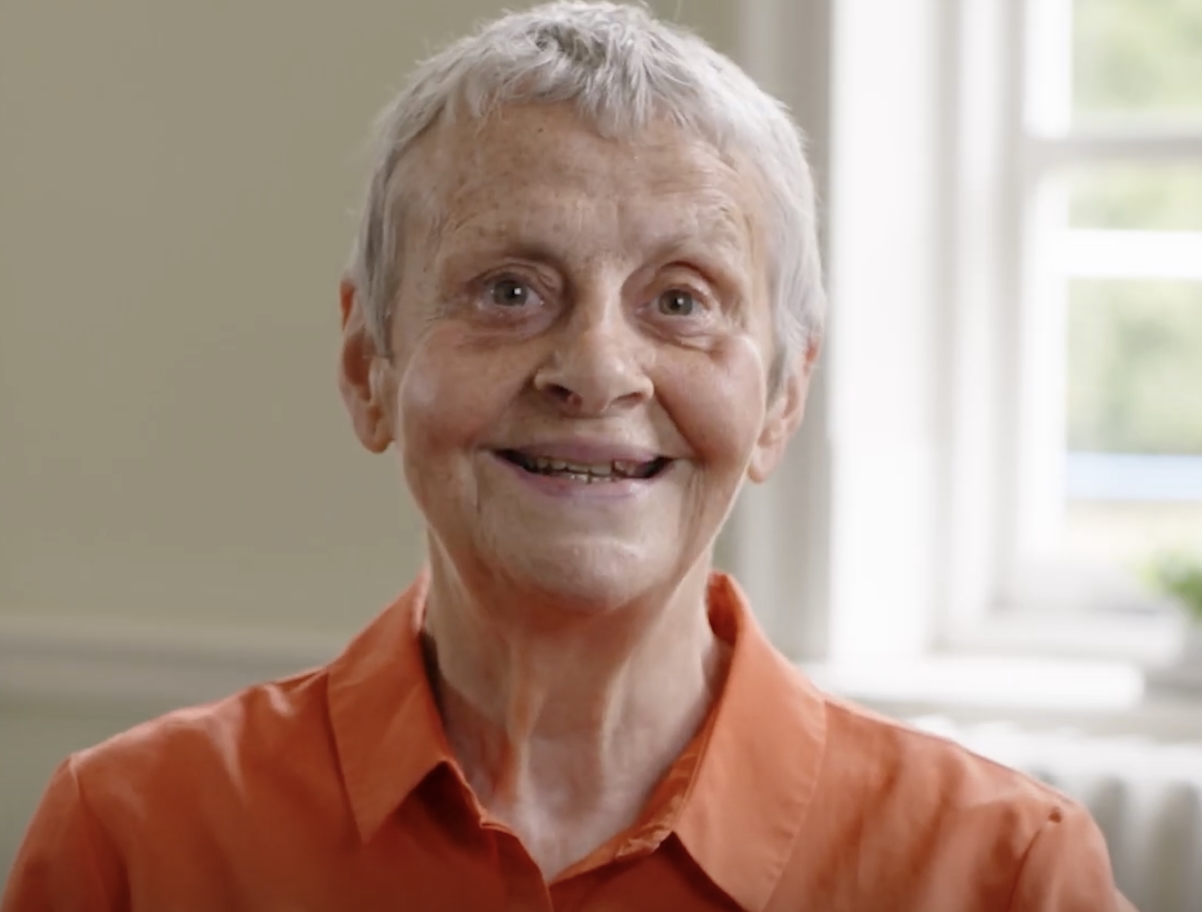
The wonderful Wendy Mitchell, 2022.
Mitchell had a successful career as a non-clinical manager in the NHS before she was diagnosed with young-onset dementia at the age of 58 years. Initially devastated by her diagnosis, and by the lack of support offered by the medical profession, she was determined to do battle with the disease. She became a public figure and “Alzheimer’s ambassador” campaigning with the Alzheimer’s Society, participating in research trials and writing blogs and articles. With writer Anna Wharton, she produced three books sharing her insights into living positively with dementia.
What I really value about her work is the way it takes you inside the mind of a person living with dementia. Until now, so much we know has come from carers, medics or loved ones who are observing this phenomenon from the outside.
Diagnosis and beyond
Mitchell’s symptoms began with an inexplicable fall when out running, followed by slurring of words, a fuzzy head and fatigue. Initially a stroke was suspected, but after many tests she was diagnosed with Alzheimer’s Disease. Mitchell describes the consultant’s attitude as “goodbye-there’s nothing we can do”. She felt broken and abandoned by the NHS.
“Imagine the psychological impact of being told that! I’m not downplaying, it’s a bummer of a diagnosis, but if she’d instead said something like, ‘I’m afraid it is dementia, but think of it as the start of a different life. My mindset would have been so different when I left her office.’”
Mitchell shared her diagnosis with her daughters Sarah and Gemma, who were at her side throughout her dementia journey. Though she lived near her one daughter, Mitchell continued to live alone and made many adaptations to ensure that she stayed independent. For example, she used memory aids like labelling cupboard doors, and forget-me-not tiles outside her front door so she remembered which house to enter.
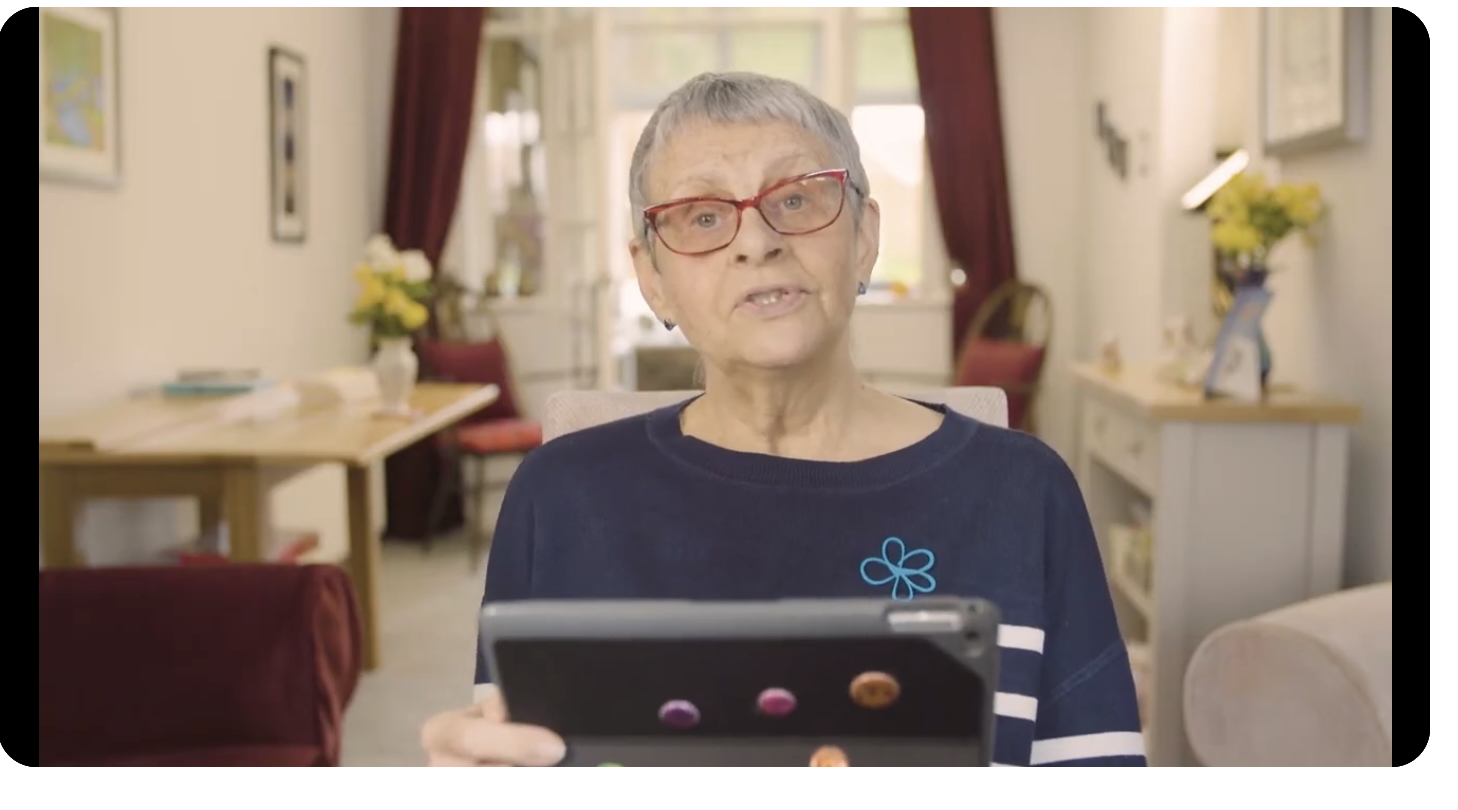 Mitchell explains how she made her home dementia friendly, https://youtu.be/k4pAaI11QeE?si=ZELszdxIAiz7T0B1
She also sought out the company of people living with disease and this became vital to maintaining her sense of self and confidence. Mitchell joined a peer support group in her local area called York Minds and Voices.
The first book “Someone I used to know” describes the diagnosis and early experiences of living with dementia. Always ready to participate, Mitchell attended a meeting of the Alzheimer’s Society’s Dementia Friends, to find she was the only person there actually living with dementia. Her first talk was to them. “So many people when they hear the word “dementia” think of the end,” she said. “Well, I’m here to show you how dementia has a beginning before the end, and so much life to live in-between. Don’t give up on us, no matter what stage we are at, we still have so much to give.”
In her campaigning, Mitchell travelled across the country to give talks and television interviews. This was always a challenge—traffic noise, the nightmare of train stations, the impossibility of directions. But she did not give up.
Eighteen months after the diagnosis Mitchells started writing a daily blog called “Which me am I today?” which became her back-up memory. By then she was living in a small village outside York, and the blog revolved around her morning walks, during which she photographed the countryside and bird life. The blogs speak profoundly of her ability to live in the moment and take huge pleasure in light, the seasons and the life around her.
 "Through the houses and up to the back lane, turning left and heading on autopilot along the muddy track.
I saw a peep of the sun coming through the thick mass of shrubs." Photo Wendy Mitchell, from February 2024 blog.
The downside of going public were the friends who melted away. After her first article in a local newspaper, she noticed a neighbour crossing the street to avoid their usual morning chat. After a few days she approached him, and he admitted that he just did not know what to say. Neighbourly relations were quickly restored.
What I find most moving about this account was Mitchells ongoing efforts to educate people to become more dementia friendly. For example the taxi company, which she used to phone repeatedly to make sure they had not forgotten her. Realising that this was annoying, one day when she was in town, she bought sweet treats and visited the taxi office to explain her situation. She was warmly received and the staff's attitude changed from one of impatience to care and concern. They even invited her to use their office to wait when a train was delayed.
Inside dementia
Mitchell’s second book “What I wish people knew about dementia” is a detailed account of living with the disease. People experience dementia differently. For Mitchell there were bad days when it was as if a fog was descending, and then it would clear again. Peers in her support group had their own terms for these days: faint days; foggy days; hazy days; fuzzy days.
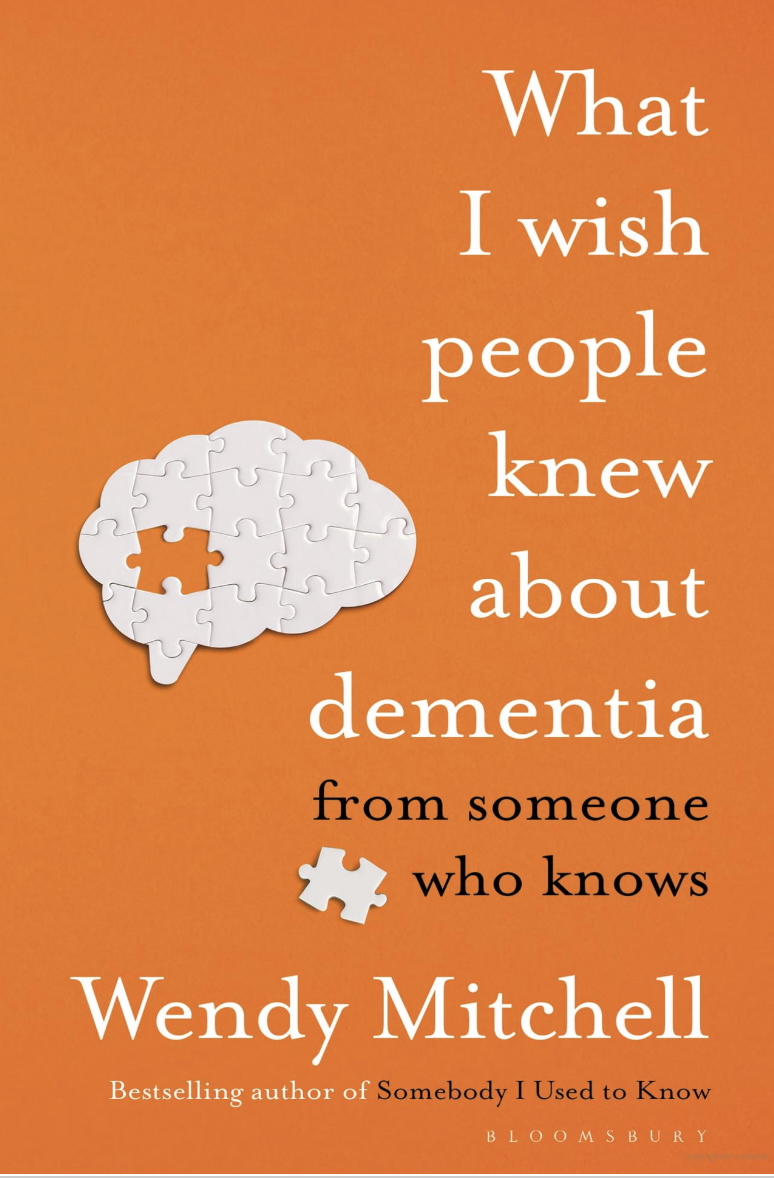
The book includes a detailed section devoted to the impact of dementia on her senses. For example, when it came to eating, a loss of the sense of taste meant that she was never hungry; and when she did eat, she preferred to have the same food every day. As she lost the ability to manipulate a knife and fork, she began using a spoon and fork. She also replaced plates with bowls as it was difficult to judge the edge of a flat surface.
As the disease advanced, she began to experience visual, aural and olfactory hallucinations. Alterations to vision were also daily challenge. It was difficult to distinguish steps, so extra care needed to be taken when encountering a staircase. Patterned carpets were disorientating as the shapes seemed to come alive and swirl. Marble floors looked like swimming pools.
The book dips into academic research on many of these topics, but it is Mitchell’s telling makes the experience come alive.
Towards the end of the book a section called Attitudes describes the increasing frequency of bad days when her “sidekick” dementia came in and took over. On these days she had no emotional affect and it was easier to stay in bed. Her attitude to bad days is important. Mitchell was reassured by the fact that although they came more frequently, they also left again.
Throughout her experience Mitchell hung on to a positive sense of self. She continued to blog and give public talks and went out of her way to challenge stereotypes by having adventures such as skydiving. “All of us want to be seen as more than just dementia,”, she wrote. "Those in denial, and miss out on the support and companionship of peers”.
Part of staying positive was Mitchell’s decision to discontinue regular assessments at the hospital. This was because each time, there was deterioration and this made her feel a failure, even though she was adapting and leading a vital, vibrant life.
Living with the end in mind
Mitchell and Wharton’s final book, “One last thing” focusses on preparations for dying. It is based on her experiences, research and conversations with peers.
Mitchell writes that the ability to talk about and accept death promotes peace of mind for the person as well as family and friends. She describes the Death Cafes which have sprung up around the country, where groups gather to “drink tea, eat cake and talk about death.” Mitchell also interviews an end-of-life doula (a non-medical support worker) on the complexity of preparing a family for the death of a loved one.
A large section of the book covers important practicalities like making a living will and power of attorney.
Early on in her illness Mitchell had planned to end her own life when the foggy days threatened to take over completely. For her, the bottom line was when not being able to remember her daughters and their names. She had investigated Dignitas, the Swiss clinic that enables individuals to choose the time and manner of their death. However, after breaking both her wrists in a fall, she did not feel confident to make such a journey alone. Instead, she chose to stop eating and drinking (Voluntary Stopping Eating and Drinking, VSED). She was supported in this by her GP and daughters.
Her final blog was written in February 2024 and posted by her daughters on the day of her death. In it she describes her strong belief in assisted dying. She wrote. “My life was for living, but now it’s time for dying. So, if you want to do something for me, please campaign for assisted dying to be law here.”*
The blog ends with a video (available on YouTube https:/ youtu.be/GjAS-07rTA4?si=rbgh4opHOXaZPs)
“Enjoy this video knowing that dementia didn’t play the winning card – I did.” Wendy Mitchell, February 2024
*Assisted dying was legalised in the UK in June 2025.
References
Age UK interview, 2019: https://www.ageuk.org.uk/discover/2019/march/wendy-mitchell-on-life-with-dementia/
Books:
*Somebody I used to know. Wendy Mitchell, with Anna Wharton, Bloomsbury, 2018
*What I wish people knew about dementia. Wendy Mitchell, with Anna Wharton, Bloomsbury, 2022
*One last thing. Wendy Mitchell, with Anna Wharton. Bloomsbury, 2023
Support:
*Alzheimer’s Society: https://www.alzheimers.org.uk/get-support
*Age UK: https://www.alzheimers.org.uk/your-local-dementia-support-servicesDeath Cafe: https://deathcafe.com/
*End of life doula https://eol-doula.uk/what-is-an-end-of-life-doula/
*Dignitas: http://www.dignitas.ch/?lang=en
Death admin:
*Compassion in dying https://compassionindying.org.uk/
*Age UK: https://www.ageuk.org.uk/information-advice/